
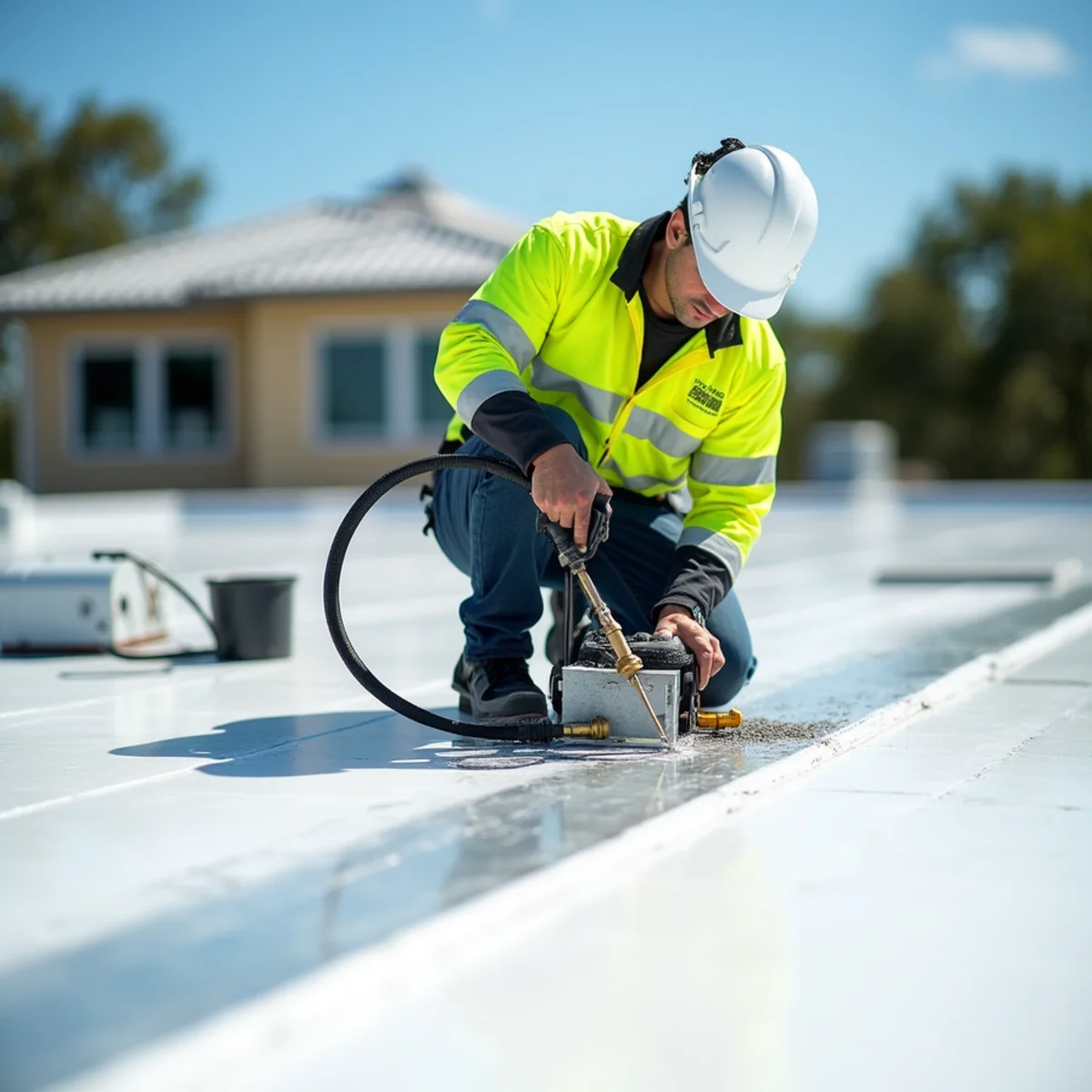
Symptoms That Require Professional Attention
If your property exhibits any of the following issues, immediate intervention halts wood rot and prevents structural decking failure:
Where Flat and Low-Slope Roofs Sit on Clearwater Homes
While residential steep-slope roofs dominate single-family neighborhoods, Clearwater features a remarkable density of low-slope and flat roof structures. In 1950s through 1970s block ranch homes throughout Pinellas County, homeowners frequently converted screened back porches into enclosed Florida rooms, home offices, or extended family spaces.
These architectural additions—along with attached carports, mid-century modern residences, and condominium balconies—typically feature roof slopes below a 2:12 pitch. At this low slope, water cannot shed rapidly by gravity as it does on a standard 6:12 shingle roof.
Standard asphalt shingles cannot be installed on roofs with a pitch below 2:12 because capillary action draws standing water beneath the laps. Low-slope surfaces demand continuous, watertight membrane systems such as modified bitumen or heat-welded TPO.
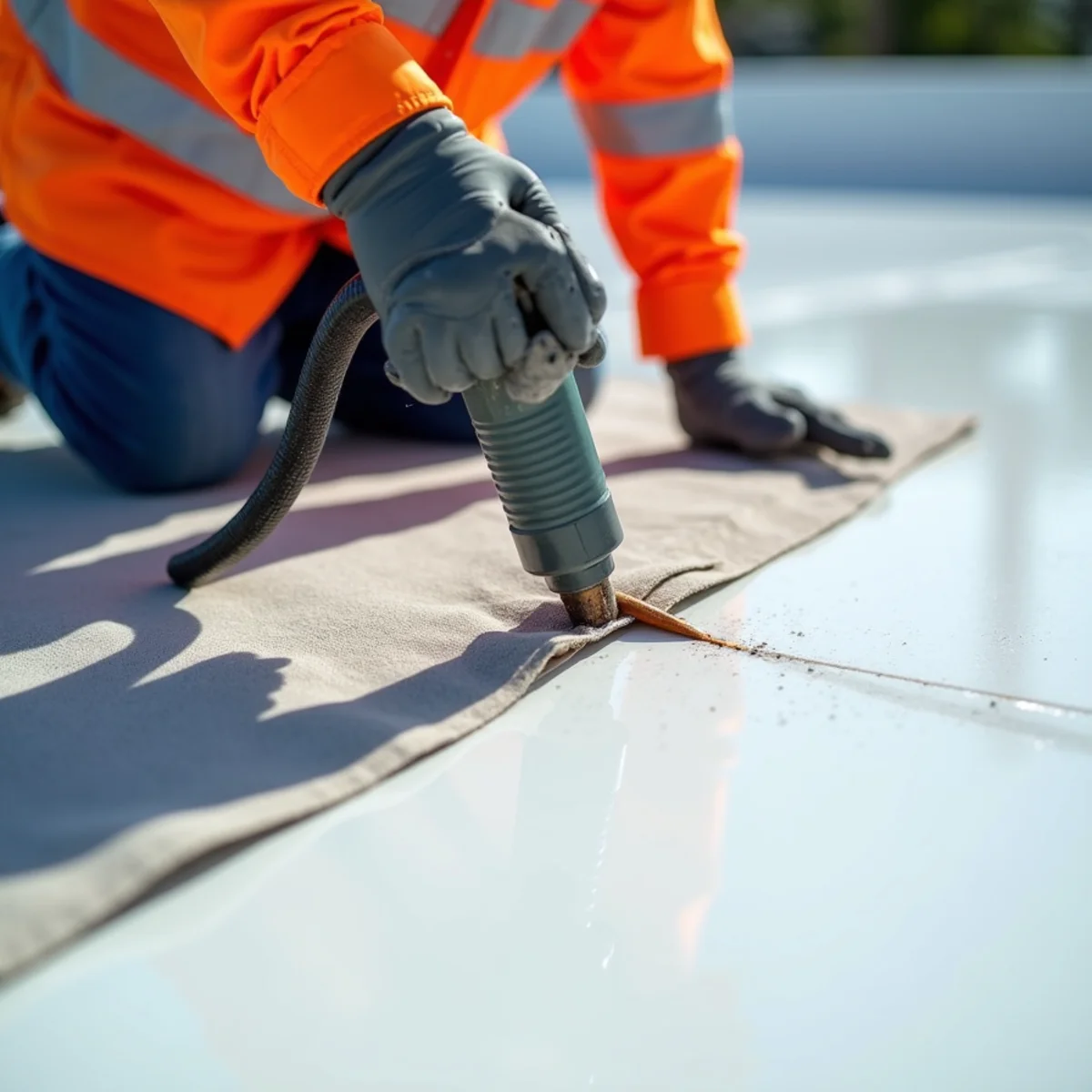
Common Flat Roof Failures: Ponding, Open Seams, and Failed Transitions
The primary adversary of any flat roof in Clearwater is ponding water. Building industry standards define ponding as water that remains standing on a roof plane 48 hours after precipitation under typical drying conditions. Persistent standing water accelerates UV degradation, breeds biological algae, softens bitumen adhesives, and exerts continuous hydrostatic pressure against membrane seams.
Open seams represent the second most frequent failure mode. Daily temperature fluctuations cause expansion and contraction of roofing sheets. Over 8 to 12 years, adhesive strips dry out and thermal tension pulls overlapping sheets apart, allowing heavy summer downpours to bypass the membrane.
Finally, transition tie-ins between the flat Florida room roof and the primary pitched shingle roof are notorious leak sources. If the low-slope membrane is not extended at least 18 to 24 inches up under the shingles with metal transition flashing, wind-driven rain easily forces its way behind the joint.
Need Urgent Flat Roof Repair in Clearwater?
Call (773) 207-0769 for immediate routing to our nearest Pinellas County crew. Written estimates upfront.
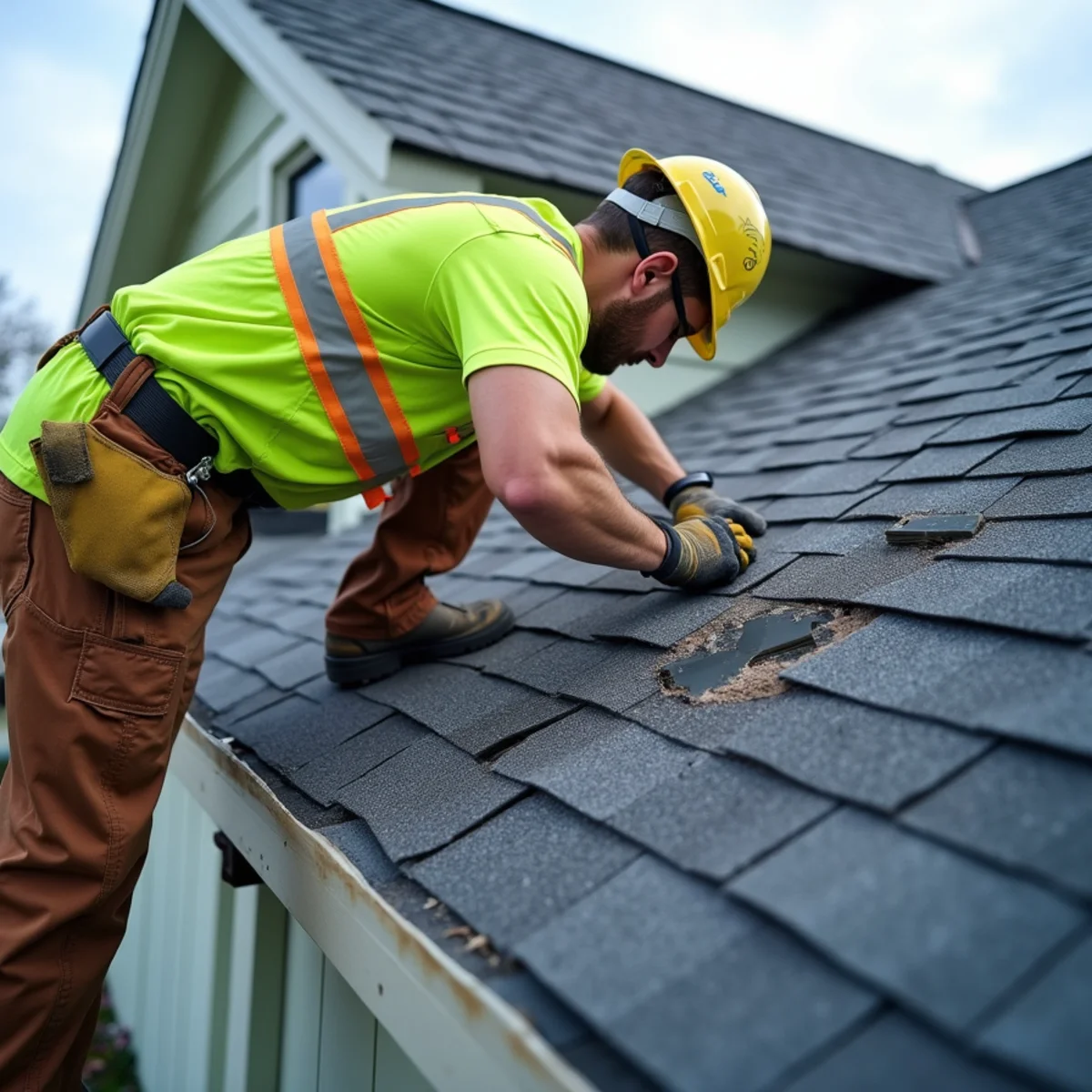
Modified Bitumen, TPO, and Built-Up Roofs: How Each Is Repaired
Successful flat roof repair requires utilizing materials chemically compatible with the existing roof substrate:
**Modified Bitumen (Torch-Down & Self-Adhered):** For localized tears or open seams on mineral-surfaced modified bitumen, we clean the surface thoroughly, prime the substrate with asphalt primer, and install a polyester-reinforced modified bitumen patch heat-fused or cold-applied with SBS-modified adhesive, feathered at the edges to prevent water dams.
**Thermoplastic Polyolefin (TPO):** TPO single-ply membranes must be patched using specialized hot-air robotic or hand welding equipment. Caulk and roof tar will not adhere permanently to TPO. We scrub the existing membrane with solvent cleaners and fuse a virgin TPO patch directly into the original sheet at 900 degrees Fahrenheit, creating a molecular bond stronger than the surrounding membrane.
Roof Coatings: When They Help and When They Merely Hide a Problem
High-solids elastomeric silicone roof coatings can be an outstanding preventative maintenance tool for Clearwater low-slope roofs. Applied correctly over a dry, sound, and fully repaired membrane, a reflective white silicone coating reflects up to 85% of solar radiation, reduces cooling loads, and withstands permanent ponding water without softening.
However, coatings are not structural repair solutions. Applying a coating over rotted plywood decking, water-saturated insulation, or active unsealed leaks is a waste of money that traps moisture within your roof structure, accelerating wood decay and dangerous mold blooms. Our technicians always execute structural repairs first before recommending coating applications.
Correcting Low-Slope Ponding Water: Tapered Polyiso Crickets and Scupper Realignment
In many mid-century Pinellas County homes and Florida room additions, dead-flat roof framing or subtle structural settling causes rainwater to pool indefinitely in depressions between rafters. When ponding water remains past 48 hours, it accelerates chemical breakdown of bitumen adhesives and creates chronic hydrostatic pressure that eventually penetrates even minor seam flaws.
Our technicians resolve chronic ponding without requiring complete structural roof reframing. We utilize engineered tapered polyisocyanurate (polyiso) insulation crickets. These factory-milled sloped insulation panels are mechanically fastened over the low spots, creating a positive 1/4-inch or 1/2-inch per foot slope that diverts standing water toward exterior scuppers, gravel stops, or gutters.
Once the crickets are anchored, a new compatible membrane cap sheet or heat-welded TPO layer is seamlessly integrated into the existing roof system, permanently eliminating the stagnant water pool and restoring rapid storm runoff.
Our Inspection-to-Completion Process
Surface Cleaning & Moisture Detection
Thorough removal of silt, biological growth, and trapped debris, followed by moisture scanning to identify trapped insulation moisture pockets.
Transition & Flashing Inspection
Detailed inspection of wall flashings, parapet caps, scupper outlets, and pitch transitions where the low-slope roof meets existing pitched structures.
Membrane Repair & Heat-Welding
Excavation of blisters, application of compatible modified bitumen or hot-air welded TPO patches, and mechanical reinforcement of perimeter edges.
Drainage Realignment & Protective Sealing
Correction of drainage scuppers, sump clearing, and application of UV-reflective elastomeric silicone coatings where appropriate to extend membrane life.
What Affects the Cost of Flat Roof Repair in Clearwater?
Rather than providing arbitrary over-the-phone estimates, our contractors evaluate the exact mechanical conditions of your roof plane to provide an accurate, written scope:
- Type of flat roofing system: self-adhering modified bitumen, torch-down asphalt, single-ply TPO, or multi-ply built-up roofing.
- Condition of structural insulation: if water has saturated polyiso insulation boards beneath the membrane, saturated sections must be cut out and replaced.
- Complexity of tie-in flashings: tie-ins between low-slope Florida rooms and primary pitched shingle roofs require multi-step shingle lifting and flashing integration.
- Drainage corrections: installing tapered insulation crickets to divert water toward existing scupper outlets.
Why Pinellas Homeowners Choose Rising Roofers for Flat Roof Repair
Roofing in coastal Florida demands strict technical adherence to building codes and manufacturer specifications. We ensure your home is protected by proven professionals:
Every contractor is vetted for active Florida DBPR licensure, commercial general liability, and mandatory workers’ compensation.
Live emergency intake answers at (773) 207-0769 around the clock. No overseas answering services or unanswered voicemails.
Detailed line-item scopes itemizing labor, materials, permits, and disposal. You approve the exact cost before work begins.
All repairs and installations meet High-Velocity Hurricane Zone (HVHZ) engineering and Florida Building Code wind uplift standards.
Flat Roof Repair — Common Questions
Expert answers regarding Florida building code compliance, timing, and warranties.
Slight deflection in roof joists, settling of foundation walls, or lack of positive slope can create shallow depressions where rainwater collects. If water evaporates within 24 to 48 hours, it is considered normal. If water remains past 48 hours, it is classified as ponding and should be addressed with tapered crickets or additional drainage scuppers to avoid premature membrane failure.
Have More Questions About Flat Roof Repair?
Our local team is on call 24 hours a day at (773) 207-0769 to discuss your Clearwater roof.
Local Pinellas County Communities We Serve
In addition to Clearwater, our certified roofing crews dispatch across the 30-minute north Pinellas corridor: