
Symptoms That Require Professional Attention
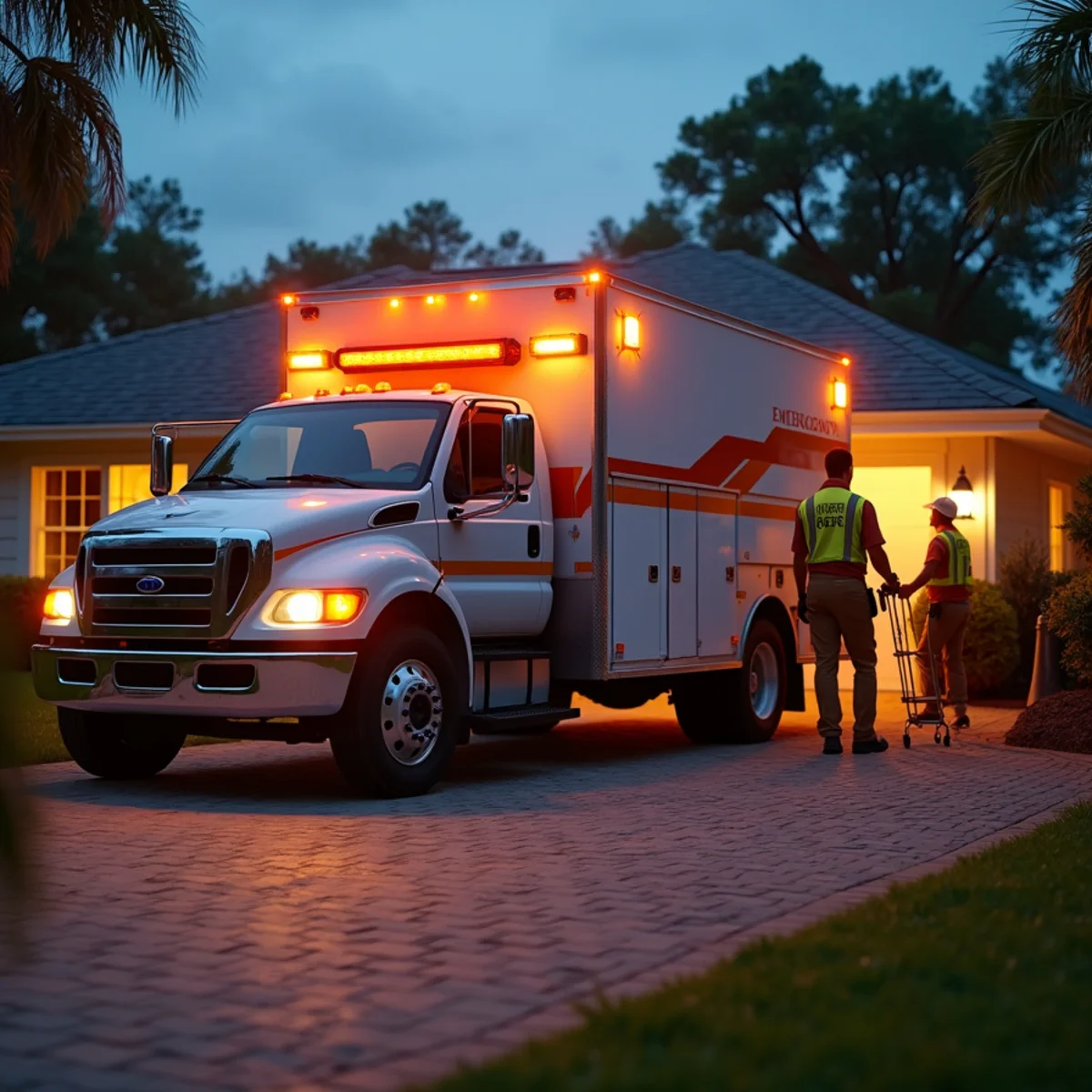
If your property exhibits any of the following issues, immediate intervention halts wood rot and prevents structural decking failure:
What Counts as a True Roofing Emergency in Clearwater?
A minor brown water ring that appeared weeks ago can generally wait for a standard scheduled appointment. However, when water is actively streaming through ceiling drywall, multiple rooms are flooding, or high winds have stripped roofing material during an ongoing rainstorm, you are experiencing a true roofing emergency.
Water infiltrating at a rate of several gallons per hour will rapidly saturate attic insulation, degrade structural ceiling drywall, and trigger massive ceiling collapses that destroy furniture, flooring, and personal belongings. Furthermore, wet building cavities in Florida's warm climate can sprout toxic black mold (Stachybotrys chartarum) within 24 to 48 hours.
When structural penetrations occur—such as when an oak branch punctures your roof trusses—immediate intervention is required to secure the building envelope.

Emergency Roof Tarping and Dry-In: What a Temporary Fix Does
Emergency roof tarping is not simply throwing a blue plastic sheet over a hole and holding it down with loose bricks or sandbags—a dangerous mistake that blows away in the next 20 mph breeze.
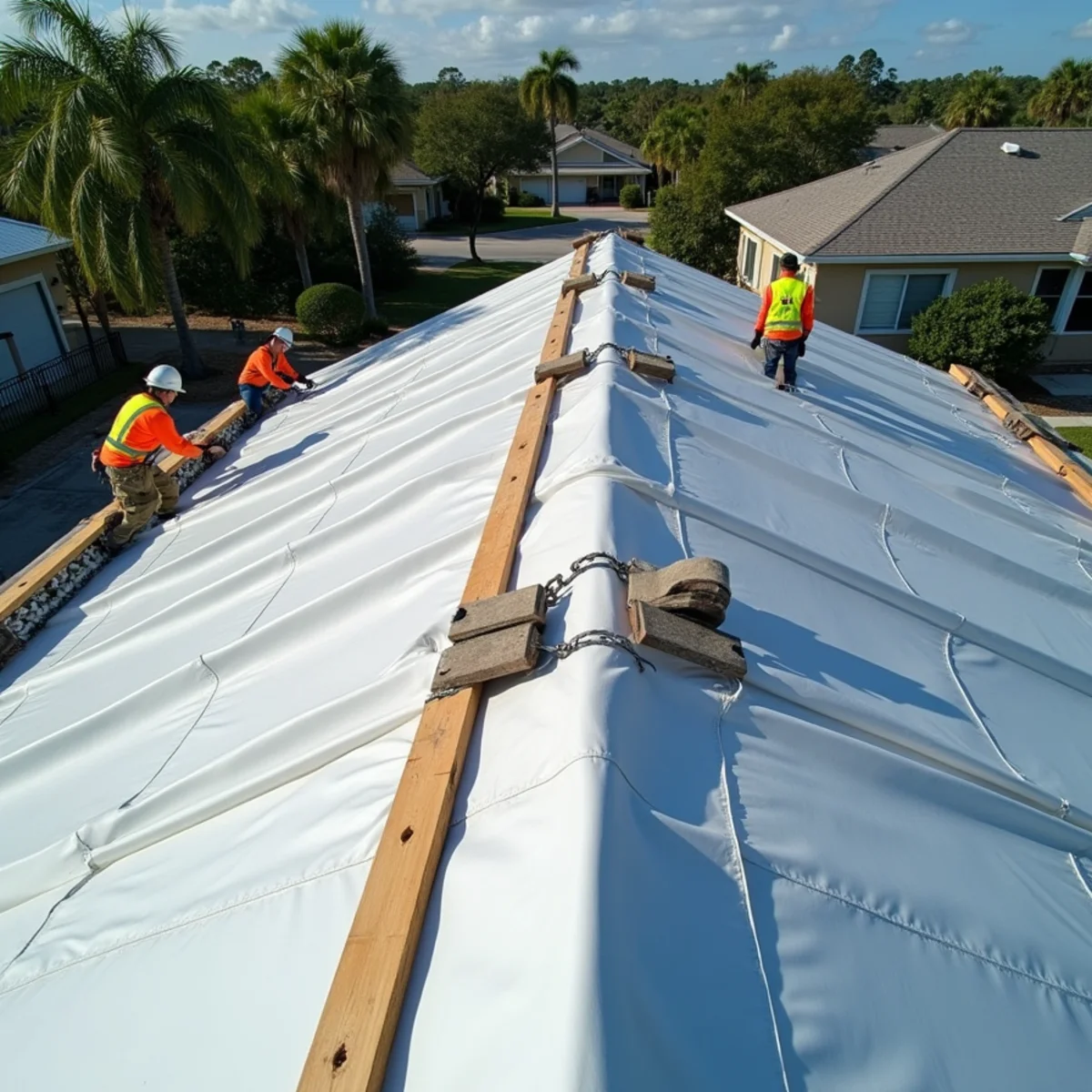
Our emergency crews utilize commercial-grade, UV-treated, reinforced woven polyethylene tarps. The tarp is cut to extend well beyond the damaged area and over the roof ridge whenever possible, ensuring water cannot seep beneath the top edge.
We anchor the tarp mechanically using 2x2 wood furring strips nailed into sound decking along all perimeter edges and seams. This battening technique eliminates wind flapping, prevents water ponding beneath the plastic, and creates a durable, weather-tight seal that protects your home for weeks while permanent repair permits and materials are organized.
Need Urgent Emergency Roof Repair in Clearwater?
Call (773) 207-0769 for immediate routing to our nearest Pinellas County crew. Written estimates upfront.
What to Do in the First 30 Minutes Before the Roofer Arrives
While our emergency team is en route, take these proactive steps to protect your household:
**1. Address Electrical Safety First:** If water is dripping near ceiling fans, light fixtures, or wall outlets, immediately turn off power to those circuits at your main electrical breaker panel.
**2. Relieve Ceiling Water Pressure:** If you notice a sagging 'belly' in your ceiling drywall filled with water, place a large bucket underneath and carefully puncture the center of the bulge with a screwdriver or nail. Relieving the trapped water in a controlled stream prevents the entire drywall sheet from tearing loose and crashing down.
**3. Document the Initial Scene:** Capture quick photos and videos of the active leak, water levels, and damaged property before clearing the area. This provides vital evidence for your insurance claim.
**4. DO NOT Climb Onto the Roof:** Never attempt to climb onto a wet roof during a storm or at night. Wet shingles are exceptionally slippery, and hidden deck rot can cause sudden structural collapse under foot.
From Tarp to Permanent Repair: The Paperwork Your Insurer Will Request
Every standard Florida homeowners insurance policy contains an explicit 'Duty to Mitigate' clause. This clause requires the policyholder to take reasonable, timely action to prevent secondary water damage following a covered loss.
Professional emergency tarping by Rising Roofers fulfills this contractual obligation. We provide you with date-stamped photographs taken before and after the tarp installation, an itemized invoice detailing the mitigation services performed, and a clear diagnostic report detailing the underlying damage.
Most insurance carriers cover the reasonable cost of emergency tarping and dry-in services as part of the initial claim settlement.
Emergency Stabilization vs. Permanent Repair: Why Night Service Focuses on Tarping
When water is cascading into your living room at midnight, our primary operational mission is immediate damage arrest: stabilizing the building envelope, deploying heavy-duty reinforced tarps, and diverting active water away from living spaces. Homeowners occasionally ask whether permanent shingle or tile replacement can be completed in the dark during a rainstorm.
Executing permanent structural roofing repairs during an active rainstorm or at night is both dangerous and technically invalid. Adhesives, modified bitumen primers, and elastomeric sealants cannot cure on wet substrates, and Florida Building Code mandates rigorous dry-deck inspections before permanent materials are fastened.
Our emergency protocol delivers immediate weather-tight stabilization that halts water infiltration instantly. Once daylight arrives and precipitation clears, our estimators conduct a thorough structural diagnostic, inspect rafter framing and decking integrity, pull necessary municipal permits, and schedule a permanent, code-compliant restoration.
Our Inspection-to-Completion Process
Live 24/7 Call Intake & Immediate Dispatch
Your call is answered immediately by knowledgeable dispatch personnel who prioritize safety guidance and mobilize the nearest licensed Pinellas crew.
Interior Safety & Diverter Placement
Immediate on-site actions to protect your interior: installing temporary water catchment diverters and isolating electrical hazards.
Exterior Heavy-Duty Tarping & Dry-In
Installation of UV-treated, reinforced commercial tarps mechanically fastened with 2x2 wooden battens to resist subsequent tropical wind gusts.
Written Assessment & Transition to Permanent Fix
Complete photographic documentation of the initial damage and emergency mitigation, accompanied by a transparent estimate for permanent code-compliant repair.
What Affects the Cost of Emergency Roof Repair in Clearwater?
Rather than providing arbitrary over-the-phone estimates, our contractors evaluate the exact mechanical conditions of your roof plane to provide an accurate, written scope:
- Timing and conditions of emergency response: after-hours, weekend, or holiday dispatch during adverse weather.
- Square footage and height of required tarping: large, multi-story roof planes require specialized safety gear and multiple heavy-duty tarps.
- Structural puncture clearing: chainsaw work and debris removal required to extract fallen tree limbs prior to tarp placement.
- Complexity of temporary water diverting: internal attic water containment in complex ceiling configurations.
Why Pinellas Homeowners Choose Rising Roofers for Emergency Roof Repair
Roofing in coastal Florida demands strict technical adherence to building codes and manufacturer specifications. We ensure your home is protected by proven professionals:
Every contractor is vetted for active Florida DBPR licensure, commercial general liability, and mandatory workers’ compensation.
Live emergency intake answers at (773) 207-0769 around the clock. No overseas answering services or unanswered voicemails.
Detailed line-item scopes itemizing labor, materials, permits, and disposal. You approve the exact cost before work begins.
All repairs and installations meet High-Velocity Hurricane Zone (HVHZ) engineering and Florida Building Code wind uplift standards.
Emergency Roof Repair — Common Questions
Expert answers regarding Florida building code compliance, timing, and warranties.
Yes. Our phone line (773) 207-0769 is answered 24 hours a day, 365 days a year by live personnel. We coordinate immediate emergency dispatches across Clearwater and Pinellas County at all hours of the day and night.
Have More Questions About Emergency Roof Repair?
Our local team is on call 24 hours a day at (773) 207-0769 to discuss your Clearwater roof.
Local Pinellas County Communities We Serve
In addition to Clearwater, our certified roofing crews dispatch across the 30-minute north Pinellas corridor: